
toolkit
The Bipartisan American Affordability and Jobs Act (S. 5653)
Led by Sens. Shelley Moore Capito (R-WV), Martin Heinrich (D-NM), Mike Lee (R-UT) and Sheldon Whitehouse (D-RI).
The Bipartisan American Affordability and Jobs Act of 2026 (BAAJA) is a comprehensive, bipartisan permitting reform package that will significantly reduce emissions, accelerate clean energy deployment, and lower electricity costs. This toolkit will help you understand BAAJA and permitting reform more generally.
Where the bill stands
Sept. 30, 2026
Introduced in the Senate
Nov. 7, 2026
Manager’s amendment added
Nov. 19, 2026
Passed the Senate
Expected soon
House vote
For BAAJA to become law, it will need to pass the House and be signed by the President before the end of the year.
Bill overview
BAAJA will significantly reduce emissions, accelerate clean energy deployment, and lower electricity costs.
The Bipartisan American Affordability and Jobs Act is expected to reduce climate pollution by billions of tons (Resources for the Future) while acting as a critical amplifier of future climate policies (Columbia Center on Global Energy Policy). Here are some specifics about the legislation’s projected impacts and the provisions that get us there.
Transmission reform
BAAJA’s transmission reforms could reduce grid costs by $7 billion, lower residential electricity bills by $1.1 billion, and reduce costs from shortages by 76% while boosting clean energy and cutting carbon emissions. (C2ES / Greenline Insights)
Read more
- Strengthens federal backstop authority for interstate transmission siting.
- Requires stronger regional and interregional transmission planning and improves cost allocation.
- Requires consideration of grid-enhancing technologies and advanced reconductoring.
- Better coordinates transmission planning and interconnection and helps expedite the interconnection queue.

Build faster
With BAAJA in place, the rate of new interregional transmission additions to the grid is projected to increase by 167-262% relative to the pace over the last decade. Accelerating transmission build-out cuts ratepayer costs, enhances reliability, and accelerates deployment of clean generation. (Rhodium Group)
Read more
- Narrows which projects trigger National Environmental Policy Act (NEPA) review, including some transmission upgrades and projects in existing rights-of-way.
- Improves agency coordination and reduces duplicative permitting.
- Narrows some aspects of environmental review.
- Establishes a 150-day deadline for legal challenges under NEPA, the Clean Water Act, Endangered Species Act, and National Historic Preservation Act.
- Limits the ability of litigation to halt already-approved projects and generally requires challengers to have participated earlier in the review process.

Fair permitting certainty
BAAJA creates more certainty for clean energy investment. Developers can invest in and build projects with greater confidence that lawful permits won’t disappear when administrations change. Employ America estimates that BAAJA could add up to 105,600 industrial jobs through 2040.
Read more
- Protects already-permitted projects from having federal approvals arbitrarily revoked.
- Prevents administrations from discriminating against an entire category of energy technology through permitting decisions.
- Gives developers legal recourse when the federal government unlawfully interferes with fully permitted projects.
- A manager’s amendment added to the bill on Nov. 7 goes even further to preserve critical protections against politically motivated interference while refining safeguards.

Community engagement
Communities should have meaningful opportunities to shape projects through early, transparent engagement. BAAJA includes some improvements and some limitations in this area.
Read more
- Requires stakeholder engagement reports for projects undergoing an Environmental Assessment or Environmental Impact Statement.
- Creates an online permitting system to improve accessibility and transparency.
- Requires a 45-day comment period for all environmental impact statements under NEPA.
- Preserves a statutory role for Tribes in consultation over historic and cultural resources.
- A manager’s amendment added to the bill on Nov. 7 goes even further to strengthen Tribal consultation, protect Tribal Historic Preservation Offices (THPOs), preserve Tribal authority, protect sensitive Tribal information
“The status quo is expensive, dirty and unstable. […] Anyone who cares about climate change should cheer this bill.”
“[BAAJA] could mark a historic achievement and a chance to reinvigorate the country’s ability to meet its energy needs.”
“Every clean energy project that gets put on hold means worsening climate impacts and dirtier air.”
Training
Learn from the experts
Recorded Citizens’ Climate trainings on what’s in the Bipartisan American Affordability and Jobs Act, what the research says, and how to talk about it.
The ins and outs of BAAJA
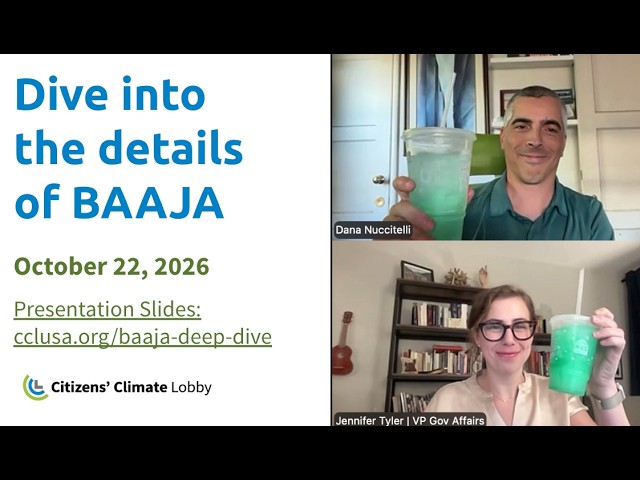
Oct. 22. CCL VP of Government Affairs Jennifer Tyler and Research Manager Dana Nuccitelli walk through what’s in the bill and what it means. Note that this training was prepared and recorded before the release of the manager’s amendment on Nov. 7.
What permitting means for climate and clean energy
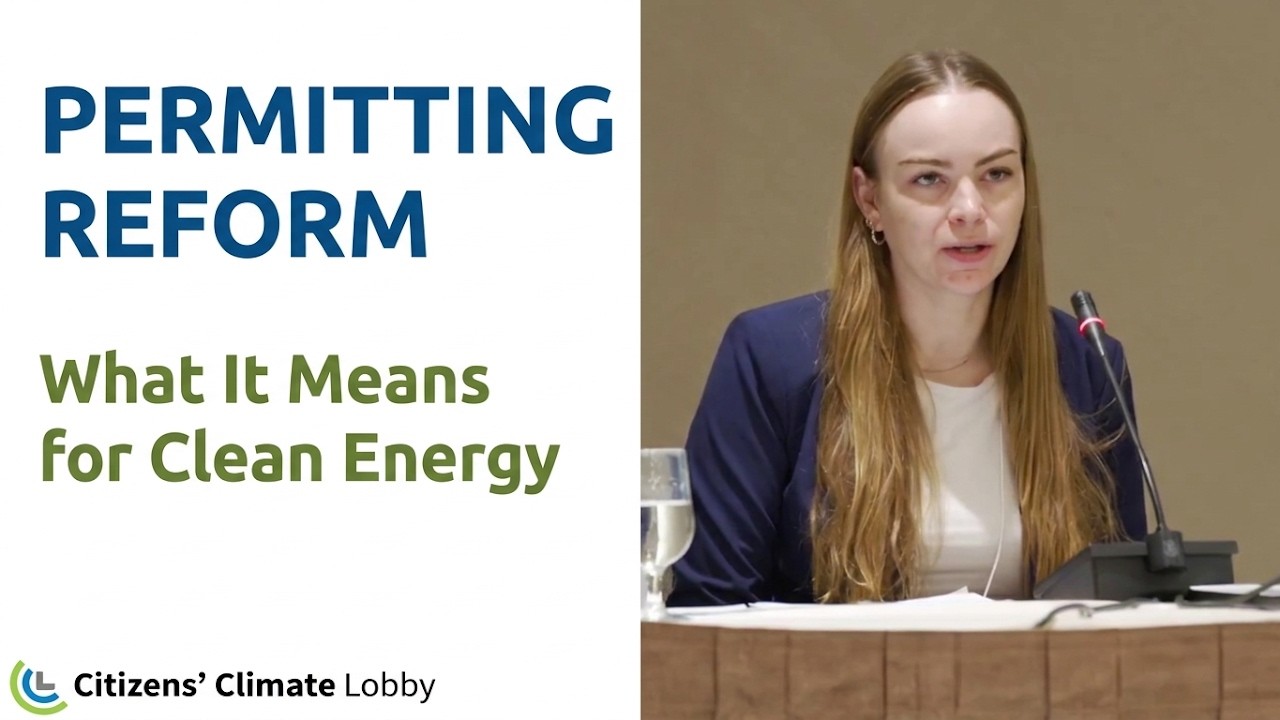
Nov. 8. Olivia Windorf (C2ES) and Dana Nuccitelli discuss expert modeling that shows BAAJA will do outsized good for clean energy and significantly cut emissions.

Common permitting reform concerns
Nov. 8. Experts respond to concerns about the bill’s changes to the National Historic Preservation Act, the Endangered Species Act, the Clean Water Act, the National Environmental Policy Act and permit certainty. With Timothy Male (EPIC), Marc Levitt (The Breakthrough Institute) and Aidan Mackenzie (IFP), moderated by Jennifer Tyler.

Engaging with local media on BAAJA
Oct. 15. CCL Communications and Media Manager Charlotte Ward covers a range of ways to discuss BAAJA in your local media outlets, including letters to the editor and op-eds.
Citizens’ Climate introductory trainings about permitting reform
In the early months of 2026, CCL hosted a six-part permitting reform training series. Led by CCL’s Government Affairs and Research Teams and featuring staffers Jennifer Tyler, VP of Government Affairs, and Dana Nuccitelli, Research Manager, this training series was designed to provide an advanced level of training to CCL volunteers interested in advancing smart, clean energy permitting reform policy.
Introduction to Permitting Reform Basics
Permitting reform is the key clean energy policy in Congress. This training explains why CCL focuses on it as the main climate solution for 2026.
Understanding the Permitting Reform Landscape
Permitting reform is complex and involves sensitive issues like NEPA, judicial reforms, and federal roles in interstate project permits.
CCL’s Transmission Reform and Key Messages
America's outdated power grid is a bottleneck for adding new clean energy sources, hindering climate pollution reduction and energy affordability.
Build Faster and Key Messages
Clean energy projects face complex permitting that delays construction and increases costs. Reforms can help good projects advance while protecting the environment.
Fair Permitting Certainty and Key Messages
Presidents from both parties have interfered with energy infrastructure permitting. These actions create uncertainty that hinders new energy development in the U.S.
Community Engagement and Key Messages
Energy project developers must engage local communities to address concerns and impacts from new projects. This training covers community engagement in permitting reform and key messages for Congress.
Resources
Read up on the bill
Understanding BAAJA
- CCL’s BAAJA fact sheet
Citizens’ Climate - How BAAJA will deliver cheaper energy, more jobs and responsible growth
Senate Energy and Natural Resources Committee - Explaining the Senate permitting bill
Bipartisan Policy Center - Manager’s amendment: key improvements
Citizens’ Climate
Modeling and polling
- Estimating the US energy system impacts of BAAJA
Rhodium Group - Projected effects of BAAJA on the power sector
Resources for the Future - 4 ways the new permitting package gets transmission policy right
Niskanen Center - Federal transmission reforms would slash power sector emissions
C2ES and Greenline Insights - What midterm voters think about permitting reform
Lake Research Partners - Polling: Americans Want Permitting Reform
Third Way
Understanding permitting
- Graphic: How a project gets permitted, step by step
Citizens’ Climate - Case studies: Permitting reform in the real world
Citizens’ Climate
Support and opposition
A broad coalition is behind BAAJA
BAAJA is supported by a broad coalition that includes clean energy industry groups like the Solar Energy Industries Association and Clean Energy Buyers Association, leading think tanks like the Bipartisan Policy Center, labor groups including the AFL-CIO and LIUNA, and NGOs working on climate, like Evergreen Action, Center for Climate and Energy Solutions, Dream.org, and Citizens’ Climate Lobby.
In their words

All of these changes are essential to enable the clean energy transition we know is needed to keep energy costs down over the long haul and stave off a spiraling climate crisis.
The time to act is now. We have to start building clean energy at scale. The planet and its most vulnerable populations can’t afford to wait.

On behalf of the 540,000 members of the Laborers’ International Union of North America (LIUNA) […] We urge lawmakers in both parties to seize this moment, pass the Bipartisan American Affordability and Jobs Act of 2026, and finally deliver meaningful permitting reform.

This is exactly the kind of bipartisan action America needs to meet growing energy demand, put downward pressure on energy prices, and deploy more affordable, reliable solar and storage for American families and businesses.

The AFL-CIO has called for permitting reform for the last decade. This permitting bill is a critical first step towards meeting the moment on affordability, jobs, and environment.

BPC Action has long argued that durable permitting reform must be bipartisan, technology-neutral, and maintain strong environmental standards. We urge swift action and look forward to working with members of both parties to get this bill to the president’s desk this Congress.

We are united with our partners in the belief that durable, technology-neutral legislation is needed to improve energy affordability, support job growth, and build clean power projects. The cost of inaction currently ripples throughout the economy, raising energy costs and electricity bills and jeopardizing the health of American families and workers. […] We look forward to supporting the passage of the bill.

This bipartisan package is a generational opportunity to unleash abundant American energy through faster infrastructure permitting and improved transmission planning. This package presents an incredible opportunity for clean energy, and we look forward to seeing it cross the finish line.
The status quo is making energy too expensive. This is a problem that both Democrats and Republicans agree needs a solution—and fast. The Bipartisan American Affordability and Jobs Act is our best opportunity. [BAAJA] is a net positive for our energy sector, climate, and country.

These good-faith negotiations have put us closer than ever before to fixing the current permitting system that has held the U.S. economy and clean energy back for far too long. […] C2ES looks forward to engaging in the debate, leveraging our expertise and trusted relationships to rally businesses, communities, and policymakers behind a deal that will finally bring our nation’s electric grid into the 21st century.

In historically underserved communities, rising energy costs can mean choosing between paying an electricity bill and meeting other basic needs. Families need relief, and Congress has an opportunity to act.
We support the vote to move this bill forward.

Other views
Additional statements
Many organizations have issued statements acknowledging both benefits and concerns about the bill, including:
Opposed
Some groups oppose the bill, including:
- Sierra Club
- League of Conservation Voters
- Natural Resources Defense Council
- Center for Biological Diversity
- Friends of the Earth US
Hearing these concerns in your community? The expert panel on common concerns responds to them.
FAQ
Common questions about BAAJA
Citizens’ Climate’s perspective on some of the most common questions and concerns raised about the Bipartisan American Affordability and Jobs Act.
The climate and energy case for BAAJA
What are the most important clean energy and transmission wins in the bill?
Electrical transmission lines are the key bottleneck slowing down the deployment of cheap clean energy in the US, and thus preventing us from reducing our emissions at the speed and scale necessary to address climate change. It currently takes a decade on average to build a new transmission line, and the US needs to build transmission lines 9 times faster than it is today to meet its power grid needs in the coming decades. BAAJA includes some of the most significant transmission reforms proposed in federal legislation, alongside provisions to accelerate clean energy development. It would:
- Strengthen transmission siting: Give the Federal Energy Regulatory Commission (FERC) the authority to permit a high-voltage transmission line if states take too long and if the project would benefit consumers and improve grid reliability.
- Improve transmission planning and cost allocation: Require stronger regional and interregional planning, including consideration of electricity needs over the next 20 years, and allocate project costs based on the benefits received.
- Modernize the existing grid: Streamline approvals for certain upgrades to existing transmission lines and require the use of grid-enhancing technologies and advanced reconductoring to increase capacity.
- Connect clean energy faster: Reduce delays in the interconnection process and improve coordination with transmission planning so more wind, solar, and battery storage projects can connect to the grid faster.
- Accelerate distributed and emerging clean energy: Support streamlined permitting and inspections for rooftop solar and battery storage, while expanding opportunities for geothermal development through permitting reforms, federal leasing, and improved agency coordination.
These provisions would all greatly accelerate the deployment of clean energy, which already represents about 90% of new power capacity being deployed in the US and about 90% of proposed projects.
Sources: Lawrence Berkeley National Lab and FERC
How do we know BAAJA will reduce greenhouse gas emissions?
Multiple modeling efforts examining the legislation and its major provisions have consistently found substantial climate benefits. While no single model captures every potential impact of the bill, the findings across these analyses reinforce our conclusion that BAAJA will meaningfully reduce emissions.
Publicly available modeling by C2ES and Greenline Insights found that transmission and interconnection reforms could reduce power-sector emissions in the four regions they considered, representing about half of U.S. electricity demand, by 71 million metric tons of CO₂ in 2035 alone – a 9% reduction. CCL has also reviewed additional modeling that incorporates the bill’s Clean Water Act provisions and other reforms. Those analyses likewise project significant emissions reductions, strengthening our confidence in the legislation’s overall climate benefits.
These findings reflect a fundamental reality: the United States cannot achieve deep emissions reductions without building substantially more clean energy infrastructure. The status quo is not climate-neutral. Transmission constraints, lengthy approval processes, and uncertainty about whether projects can move forward are holding back clean energy development and prolonging our reliance on fossil fuels. BAAJA directly addresses these barriers, enabling more clean energy to reach the grid, displace fossil fuel generation, and reduce emissions over the long term.
Will BAAJA only reduce U.S. climate pollution by 4%?
Some opponents of BAAJA have argued that the bill’s tradeoffs are not worthwhile because, they claim, the bill will “only” reduce our climate pollution by 4% or less. This is inaccurate, as discussed in further detail below, but it’s also worth noting that most individual climate policies and campaigns would yield significantly less than a 4% reduction in American climate pollution. Climate change is a widespread problem without a silver bullet solution – it will require a lot of silver buckshot, and dismissing a policy that could avoid billions of tons of climate pollution is inconsistent with that vision.
But passing BAAJA would be a massive victory in the fight to reduce climate pollution. Most of the BAAJA modeling only focuses on the power sector, where BAAJA would have the greatest impacts by expanding transmission and clean energy deployment. But cheaper, cleaner electricity also helps to decarbonize other sectors, like transportation as more people transition to electric vehicles, and buildings as more people install heat pumps.
Rhodium did employ an economy-wide model, and their report is the source of the 4% statistic. But Rhodium also emphasized that their BAAJA modeling was very conservative, noting:
Critically, our preliminary modeling does not include an attempt to reflect the permit certainty provisions of the bill …. We also do not currently model the geothermal, advanced transmission technology, or [virtual power plant] market access provisions of the bill … the results we discuss in this note are conservative estimates of impacts.
All of the modelers estimated that BAAJA will likely reduce U.S. climate pollution by billions of tons over the coming decades. How many billions of tons is highly uncertain. But several analyses also noted that BAAJA will act as a critical amplifier of future climate policies like clean energy tax credits or a price on carbon pollution. That’s because those policies create the incentive to deploy low-carbon technologies, but as we saw with the Inflation Reduction Act, slow permitting processes can act as a bottleneck preventing those solutions from being built in the real-world. For example, Rhodium’s Ben King told Heatmap News,
If your goal is to do climate policy in the future, [BAAJA] is an important down payment to making progress there.
How could BAAJA help with affordability, reliability, and energy security?
BAAJA would help lower electricity costs and strengthen grid reliability by making it easier to build transmission lines, connect affordable clean energy, and move electricity between regions. Expanding transmission and generation capacity would also help meet growing electricity demand and reduce the risk of costly blackouts.
Modeling by C2ES and Greenline Insights estimates that BAAJA’s inter-regional transmission and interconnection queue changes will create:
- $19 billion in residential electricity savings
- $125 billion in power system costs savings
- 76% reduction in costs from power outages
BAAJA also strengthens FERC oversight of inefficient transmission investments and includes provisions aimed at ensuring data centers pay their fair share of grid infrastructure costs rather than shifting those costs onto households. It gives states additional flexibility to establish electricity rates for data centers that can help protect residential customers.
Together, these reforms would help make America’s electricity system more affordable, reliable, and capable of meeting growing energy demand.
Fossil fuels, permitting certainty, and the administration
Why do fossil fuel groups also endorse BAAJA? Won’t BAAJA make it easier to build fossil fuel infrastructure?
The vast majority of energy industries and companies — clean and fossil alike — support BAAJA because they want to expedite their own project permits. BAAJA will make it easier to build all energy infrastructure, and the key to consider for the climate is how much it accelerates low-emissions vs. fossil fuel infrastructure both today and for decades to come. The scale of clean energy development that BAAJA will help unlock far outweighs the additional fossil fuel development it facilitates, delivering substantial long-term climate benefits.
The scale of the clean energy opportunity is enormous. At the end of 2025, nearly 1,000 gigawatts (GW) of solar and wind projects were awaiting grid interconnection, compared with 253 GW of natural gas generation. Another 749 GW of energy storage was also awaiting connection.¹ In other words, about 90% of power capacity of new projects waiting to be built are clean, as were about 90% of the energy power capacity built in the US in 2025.
Modeling by C2ES and Greenline Insights found that transmission and interconnection reforms across only four regions of the US could reduce power sector emissions by 71 million metric tons of CO₂ in 2035 alone — a 9% reduction across an area representing more than half of U.S. electricity demand.
Meanwhile, natural gas power generation is constrained by supply chains. A gas turbine ordered today won’t be delivered for about 5 years, whereas clean energy solutions like solar panels and battery storage are ready for quick deployment today.
BAAJA has attracted broad interest and support in part because its permitting reforms could benefit multiple energy technologies, including both clean energy and fossil fuels.
However, the modeling and evidence overwhelmingly indicates that clean energy will be the big winner of BAAJA, and the long-term climate benefits of accelerating the clean energy transition far outweigh the additional emissions associated with fossil fuel development enabled by the bill.
Will the certainty provisions in BAAJA favor fossil fuel projects and prevent a future administration from halting them?
BAAJA’s permitting certainty provisions are technology-neutral, protecting both clean energy and fossil fuel projects from certain forms of politically motivated permitting interference. This is an important component of a bipartisan agreement, even though it means future administrations would face additional restrictions on blocking fossil fuel projects.
CCL has historically prioritized durable climate policy enacted by Congress over temporary executive restrictions on particular energy sources. Our focus is on accelerating clean energy deployment and achieving sustained emissions reductions, rather than relying on administrative actions that can be reversed when political leadership changes.
BAAJA also establishes a five-year historical benchmark for evaluating discriminatory permitting delays and denials. Critics have argued that recent restrictions on clean energy could weaken this protection. However, the initial comparison period would also include three years under the Biden administration, when clean energy permitting was generally more favorable. The benchmark therefore would not be based exclusively on the Trump administration’s recent treatment of renewable energy projects. Importantly, the bill would also create new legal avenues to challenge discriminatory permitting practices.
BAAJA’s permitting certainty provisions are themselves a major climate policy achievement. By establishing enforceable protections against politically motivated permitting interference, they would provide clean energy developers with greater confidence to invest in and build projects, regardless of which administration is in power. Combined with the bill’s transmission and interconnection reforms, these provisions would help create a more stable, durable foundation for accelerating clean energy deployment and reducing emissions.
How can we trust a permitting reform agreement while the Trump administration continues to disregard environmental laws and block clean energy projects?
The Trump administration is currently blocking clean energy project permits by stretching its authority under existing laws. That works where those laws don’t provide clear limits on federal agency behavior or don’t give project developers and courts the ability to effectively enforce the laws.
The Trump administration’s actions to obstruct renewable energy development are precisely why stronger statutory protections are needed. The administration has demonstrated how executive authority can be used to delay, block, or undermine clean energy projects, creating uncertainty that discourages investment and threatens our ability to meet long-term climate goals.
Senate Democrats extracted a concession from the Trump administration to resume permitting onshore clean energy projects in exchange for passage of BAAJA, but more importantly, the bill would codify these fair permitting certainty protections in law. A verbal commitment from the administration to stop targeting clean energy projects would offer little assurance that these practices will end; however, BAAJA directly addresses this problem by establishing enforceable guardrails on federal agencies.
The legislation restricts an administration’s ability to arbitrarily revoke previously issued permits or impose blanket restrictions on entire categories of energy projects. It also gives developers additional legal avenues to challenge unlawful actions and seek financial damages when agencies violate these protections.
BAAJA would give clean energy developers stronger legal protections and greater certainty to invest in projects over the long term. For CCL, these durable statutory protections are one of the legislation’s most important clean energy achievements.
Environmental protections and community engagement
Does BAAJA weaken longstanding environmental protections (such as the National Environmental Policy Act (NEPA), the Clean Water Act, and the Endangered Species Act)?
BAAJA includes significant changes to longstanding environmental laws, and we recognize that some of those changes involve difficult tradeoffs for the sake of a durable, bipartisan bill that reduces climate pollution and the costly damages that it causes. Rising temperatures, worsening droughts, destructive wildfires, and increasingly severe flooding are harming people, degrading water quality, destroying wildlife habitat, and threatening vulnerable and endangered species. The status quo is not protecting our environment from these impacts, and maintaining it comes with real environmental costs.
The United States cannot achieve deep emissions reductions without dramatically expanding clean energy generation, transmission, and the infrastructure needed to electrify our economy. Yet existing permitting and approval processes can delay or prevent these projects from moving forward. Those delays prolong our dependence on fossil fuels and the pollution that harms communities, waterways, and ecosystems.
BAAJA makes important progress on these barriers while providing greater certainty for energy development across administrations. We do not support every provision in isolation, but the legislation must be evaluated as a whole and against the alternative of continued inaction. Multiple modeling efforts reviewed by CCL consistently point to significant emissions reductions. The substantial, lasting climate benefits of BAAJA must be weighed alongside its environmental tradeoffs, including the climate change consequences for public health, wildlife, clean water, and ecosystems if we fail to accelerate the clean energy transition. These tradeoffs must be weighed by considering the very real environmental costs we will pay under the status quo that disproportionately benefits incumbent fossil fuels.
Does BAAJA weaken NEPA and limit environmental review and legal challenges?
BAAJA standardizes but does not eliminate reviews across multiple environmental statutes, including NEPA. BAAJA makes significant changes to NEPA, including narrowing which projects require federal environmental review, establishing shorter deadlines for legal challenges, and limiting some judicial remedies. These changes raise legitimate concerns about environmental oversight and accountability, which CCL has weighed against the legislation’s broader climate benefits. While CCL does not necessarily support every individual change to NEPA, we believe these reforms, considered as part of the bipartisan legislation as a whole, will help accelerate the clean energy transition and deliver substantial environmental benefits.
Research demonstrates that NEPA can be a significant obstacle to clean energy deployment. A Stanford University study found that 64% of major solar projects requiring environmental impact statements faced litigation, compared with 50% of pipeline projects. A separate survey by Third Way found that more than 80% of transmission professionals and 60% of solar professionals identified NEPA as the source of their longest permitting delays.
BAAJA directly addresses these barriers. Approximately two-thirds of planned transmission line miles could require an environmental impact statement under existing requirements. BAAJA exempts certain upgrades to existing transmission infrastructure and projects within existing rights-of-way from NEPA review, making it easier to expand the capacity of our existing grid. It also allows qualifying state and Tribal environmental reviews to substitute for federal reviews, reducing duplication. And it gives the Federal Energy Regulatory Commission the authority to permit big important transmission lines that will benefit the public interest by reducing grid congestion and electricity bills.
The clean energy transition cannot succeed if the processes intended to protect the environment prevent us from building the infrastructure needed to address climate change. While these reforms involve tradeoffs, we believe their benefits, viewed alongside the broader provisions of BAAJA, outweigh the drawbacks.
Does BAAJA weaken the Clean Water Act?
Our support for BAAJA reflects the legislation’s overall climate and environmental benefits, not an endorsement of every change to the Clean Water Act. The modeling CCL has reviewed, including analyses incorporating the bill’s CWA provisions, consistently projects significant emissions reductions. We believe those benefits outweigh the tradeoffs involved.
Under Section 401, BAAJA narrows state certification authority to a project’s direct impacts on water quality. States would retain the ability to review those impacts, but their authority to consider broader concerns would be limited. This would mean that states could only use the Clean Water Act to veto a project like a natural gas pipeline within their borders due to water quality impacts, not for air or climate pollution reasons, for example. Under Section 404, the bill also restricts EPA’s ability to veto certain dredge-and-fill permits after they have been issued. These are substantive changes, and CCL does not support each provision individually.
However, the existing permitting system also creates barriers to building the infrastructure needed to reduce pollution and address climate change. Transmission lines often cross multiple waterways and jurisdictions, making them vulnerable to CWA permitting delays, potential state vetoes, and uncertainty.
BAAJA makes significant changes to the CWA, and we recognize the concerns these changes raise about environmental protection and state authority. These provisions represent real tradeoffs, but they must be considered in the context of the legislation as a whole and the urgent need to accelerate the clean energy transition. Importantly, the Clean Water Act’s water quality protections remain intact.
Does BAAJA weaken the Endangered Species Act?
Climate change is already threatening endangered species and destroying critical habitats across the country. Protecting vulnerable wildlife requires not only strong environmental safeguards, but also accelerating the clean energy transition to address one of the greatest threats to their survival. While BAAJA includes changes to the ESA that involve tradeoffs, CCL believes the legislation must be evaluated as a comprehensive package, including its potential to deliver substantial emissions reductions and long-term benefits for biodiversity. For example, Timothy Male of the Environmental Policy Innovation Center believes that by reducing climate pollution and through its efficient electronic permitting changes, BAAJA is “a net positive for endangered species.”
BAAJA adds consistency across environmental law timelines, resulting in shorter but also more clear and predictable timelines. It also reduces the deadline for bringing covered legal challenges to 150 days and authorizes $150 million annually to support ESA consultations and state participation. It allows qualified states to assume certain consultation responsibilities, subject to federal approval and requirements to demonstrate adequate resources and expertise. These provisions represent significant changes to the existing process, but they do not eliminate federal protections for endangered species.
These changes must be weighed against the growing threat climate change poses to endangered species. The Intergovernmental Panel on Climate Change (IPCC) estimates that up to 14% of species face a very high risk of extinction at 1.5°C of warming, rising to as much as 29% at 3°C. Accelerating clean energy deployment is itself an important conservation strategy. Timothy Male has estimated that each gigawatt of new wind or solar power could help prevent approximately 42 species extinctions globally. While illustrative rather than a precise prediction, this estimate underscores the biodiversity benefits of reducing emissions.
CCL does not support the ESA amendments in isolation. However, we believe BAAJA’s substantial climate benefits, considered as a whole, outweigh these tradeoffs and will help protect vulnerable species and ecosystems over the long term.
Does BAAJA weaken the National Historic Preservation Act and Tribal sovereignty and historic preservation?
BAAJA includes several changes to the National Historic Preservation Act (NHPA) including provisions that narrow the scope of NHPA reviews to certain impacts on historic properties within the federal portion of a project, require NHPA consultation to conclude alongside NEPA review, and establish a 150-day deadline for covered legal challenges, with additional requirements governing who may bring those challenges.
At the same time, the legislation includes provisions intended to strengthen and formalize some important Tribal protections. The bill for the first time codifies requirements for federal agencies to begin Tribal consultation early in the environmental review process and at each step of the review, rather than relying solely on agency regulations. It also explicitly recognizes that natural features, including mountains, springs, and landscapes, can qualify as historic properties, and that places of religious or cultural significance to Tribes are eligible for protection.
The bill also provides opportunities for Tribes to lead certain environmental reviews and authorizes $200 million to support the Historic Preservation Fund, along with additional resources to help Tribes identify and document culturally significant sites.
These provisions come at a time when existing Tribal consultation protections face potential rollbacks, including a recent vote by the Advisory Council on Historic Preservation to reduce Tribal involvement in NHPA reviews. NHPA reviews also have implications for clean energy deployment, with one analysis finding they are nearly 10 times more likely to identify adverse effects from transmission and clean energy projects than fossil fuel projects. These considerations help illustrate the complexity of the policy issues involved, even as we recognize that the bill’s changes to NHPA raise legitimate concerns. Many of those concerns have been voiced by the National Association of Tribal Historic Protection Officers, and some may be addressed in technical changes implemented in the manager’s amendment process as BAAJA proceeds through the Senate.
CCL’s endorsement of BAAJA is not an endorsement of every individual provision. Historic preservation policy is not a primary focus of our organization, and we recognize that stakeholders with expertise in these issues may have different assessments of the bill’s impacts.
Does BAAJA limit community input and legal challenges?
BAAJA includes some important provisions to strengthen public engagement earlier in the permitting process. It requires stakeholder engagement reports, incentivizing project developers to consult with communities early, when their input can have a greater influence on project decisions. The bill also establishes an online NEPA system that would make project information, environmental reviews, and opportunities for public participation more accessible to everyday Americans, including people who have never previously engaged with the federal permitting process. This represents an important opportunity to make a complex and often difficult-to-navigate process more transparent and accessible.
BAAJA also establishes a 150-day deadline for certain legal challenges. A Resources for the Future analysis of 27 lawsuits involving clean energy projects found that nearly 90% were filed within approximately 150 days of an agency decision.
This demonstrates that a five-month window is consistent with how the vast majority of challenges in the study were already being filed, while reducing prolonged uncertainty for critical infrastructure projects.
BAAJA also makes significant changes to public participation and judicial review, including shorter deadlines for filing lawsuits and restrictions on the remedies courts can provide. We recognize that these changes raise legitimate concerns about communities’ ability to challenge harmful projects.
CCL believes meaningful community participation and timely infrastructure development are both essential. While the restrictions on legal challenges involve real tradeoffs, the bill’s provisions for earlier engagement and greater transparency are meaningful improvements that should be considered alongside its broader climate benefits.
Wouldn’t it be better to speed up permitting by giving agencies more staff and resources instead of changing environmental review requirements?
Both approaches are important. Improving permitting efficiency should not depend solely on reducing environmental review requirements. Federal agencies also need adequate staffing, technical expertise, modern technology, and resources to conduct thorough reviews and make timely decisions. CCL has advocated for adequate funding of federal agencies through the appropriations process.
BAAJA includes provisions addressing both challenges. It provides specialized hiring authority for FERC, greater staffing and compensation flexibility for power marketing administrations, a geothermal permitting ombudsman, additional funding for Tribal historic preservation, and grants to help improve permitting for distributed energy resources, like rooftop solar and home battery storage.
Political strategy and timing
Should we wait until the next Congress, when we might be able to negotiate a better permitting reform bill?
There is little reason to believe that waiting until the next Congress would produce a better permitting reform agreement, and many reasons to believe it won’t. BAAJA is the product of extensive bipartisan negotiations, including the leadership of Senators Sheldon Whitehouse and Martin Heinrich, two of the strongest advocates for congressional climate action. Reaching this agreement required difficult compromises, and there is no guarantee that a future negotiation would produce stronger climate provisions or fewer environmental tradeoffs.
The fundamental political constraints are unlikely to change. President Trump will remain in office, and the Senate’s 60-vote threshold will continue to require bipartisan agreement. Changes in congressional leadership, committee membership, and negotiating teams could make reaching another agreement even more difficult.
Both the 2024 Energy Permitting Reform Act (EPRA) and BAAJA required roughly two years of negotiations. Starting over could mean losing many more years while transmission bottlenecks and permitting uncertainty continue to delay clean energy development. Failing to pass BAAJA would also tie up the bandwidth of future Congresses in renewed comprehensive permitting reform negotiations, and limit the amount of cheap clean energy that the next presidential administration could add to the grid.
The climate cannot afford another two-plus years of negotiations with no guarantee of a better outcome. BAAJA offers an opportunity to establish durable transmission and permitting reforms now, accelerating clean energy deployment and laying the groundwork for further climate progress under future administrations. Waiting carries real costs, and the opportunity before Congress today should not be taken for granted.
What happens next, and what is the path to passage?
The Senate is considering BAAJA as a standalone bill. It passed the first cloture votes to proceed with Senate consideration by wide bipartisan margins. A manager’s amendment addressed many concerns raised in the initial text, and further amendments are now under consideration. If BAAJA passes the Senate, it will move to the House, where it could be considered on its own or as part of a larger legislative package.
Our goal is to make as much noise and build as much support for the bill as possible. We’ll continue layering on new actions and advocacy strategies as the legislative process unfolds.
Data centers, ICE detention facilities, and unintended consequences
Will BAAJA be a boon for data centers, especially on federal lands, with dirty off-grid gas power?
Almost all data centers are built on private lands, and are hence not subject to NEPA. BAAJA doesn’t make it easier or harder to build those – they’re only subject to state and local, not federal permitting.
Secretary of the Interior Doug Burgum is proposing to build about 15 data centers on federal land, and their permitting would be expedited by NEPA reforms. But there are literally thousands of data centers around the country, so this is an issue for less than 1% of data center projects.
Meanwhile BAAJA is extremely financially punitive to data centers by making them pay more than their fair share to connect to the grid. The experts at Grid Strategies estimated that this provision would collect $35 billion from data centers for residential ratepayers over ten years. And BAAJA would allow states to charge data centers a special extra high rate for electricity, which Grid Strategies estimated could generate an additional $136 billion for ratepayers over the next decade. The manager’s amendment also added a Data Center Community Assistance Program to help communities get more information about data centers proposed in their area.
Another big benefit of BAAJA is getting data centers connected to the grid. Data centers are coming regardless of whether we pass permitting reform. The question is whether we meet that growing electricity demand with clean energy from the grid or whether data centers build their own dirty off-grid natural gas power. Climate scientist Zeke Hausfather estimated that a data center connected to the grid will generate about half as much climate pollution over its lifetime as one that relies on off-grid gas power, and much less local air pollution as well. BAAJA allows more data centers to connect to the grid by accelerating the deployment of transmission and clean energy infrastructure.

Will BAAJA make it easier for ICE to build detention centers?
BAAJA does not mention or modify any U.S. immigration policy. U.S. Immigration and Customs Enforcement (ICE) currently detains people in 469 separate facilities. Most of these facilities require no new environmental review to keep operating. Of those 469 facilities, just nine have been challenged under NEPA, for example for failing to first complete an environmental review. That’s less than 2% of facilities. At most, these lawsuits have only temporarily changed where ICE houses certain detainees.
NEPA was not designed to be a catch-all check on any project people dislike for reasons other than ecological concerns. That’s exactly what’s happening to many big important clean energy projects like solar farms and transmission lines, as well as affordable housing and public transit and broadband internet projects, and it’s why NEPA reforms are important for the clean energy transition.
Opposing BAAJA because of its indirect effects on a few ICE detention facilities is like opposing a reversal of President Trump’s tariffs, because they make the construction of these detention facilities somewhat more expensive. These kinds of projects need to be challenged on their own merits. Democrats will control Congress starting in 2027, and can directly revoke detention center funding if they so desire.
Take action
Help get BAAJA across the finish line
Here’s what you can do right now to support the bill.
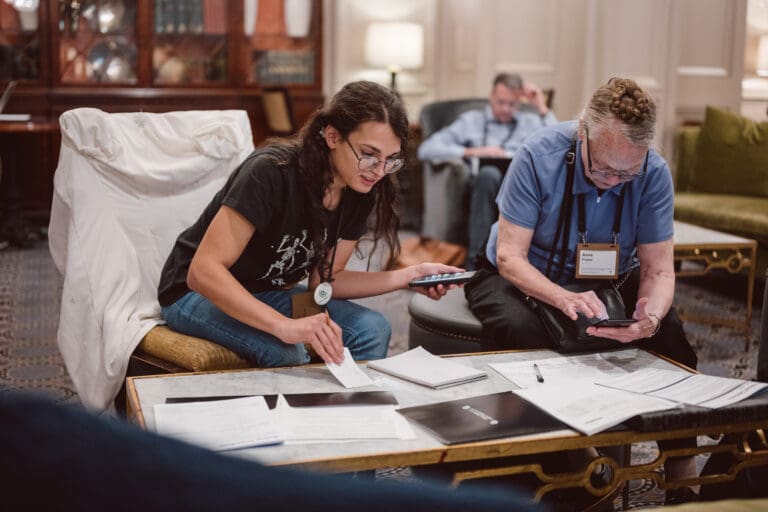
Write to your Representative
If it passes the Senate, BAAJA goes to the House. Build your Representative's support now.

Thank your Senators
On Nov. 19, the Senate passed the Bipartisan American Affordability and Jobs Act with a strong bipartisan vote of 62–33. If your Senators voted in support, use our action tool to send them an appreciative message.
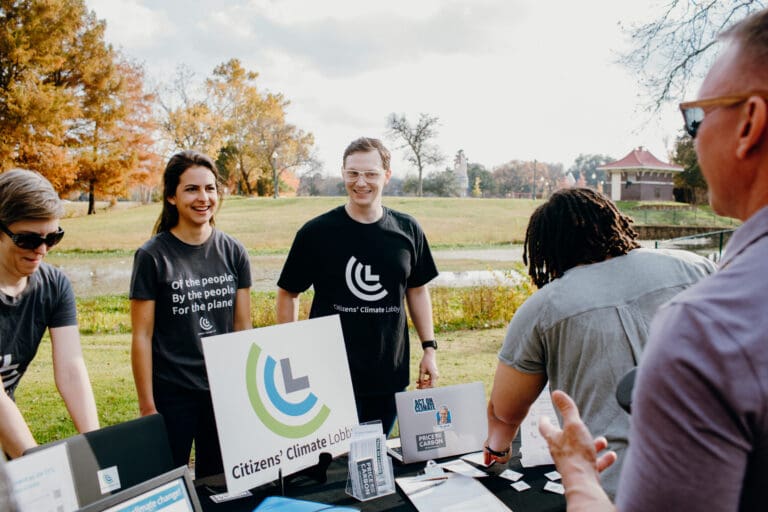
Talk about it in your community
Help your neighbors understand BAAJA and ask them to act, with a handout made for tabling.
Spread the word online
Like, share and comment on CCL's posts about the bill to keep the conversation going.
Are you ready to solve climate change?
Volunteers like you are working together for national climate action. Join today to be one of them!