After House passage, CCLers build Senate support for Save Our Sequoias
By Elissa Tennant & Flannery Winchester
When choosing federal legislation to support, CCL looks for policies that will reduce emissions and remove climate pollution from the atmosphere — that means limiting, and even taking out, the excess gases that are trapping heat and driving climate change. Over the years, we’ve backed several climate-friendly forestry bills to help achieve that goal, including one you may remember: The Save Our Sequoias Act.
In exciting news, the Save Our Sequoias Act recently passed the House (H.R. 2709), and a companion bill has been introduced in the Senate (S. 4103)! This month, we’re contacting Republican and Democratic Senators to encourage them to sign onto the Senate version as cosponsors and continue building on this momentum. Let’s take a closer look at CCL’s history of support for this bill and why it would make such a big difference.
On board since 2022
The Save Our Sequoias Act was first introduced in 2022. CCL’s Government Affairs team provided feedback on the initial draft and subsequent reintroductions to help make the bill even stronger in terms of its positive climate impacts.
Upon reintroduction in 2023, we publicly endorsed the bill, saying, “CCL is pleased to see strong bipartisan support for a comprehensive plan to address the increased wildfire and climate threat to California’s treasured giant sequoias.”
Later that year, the bill was one of our secondary asks when CCLers lobbied on Capitol Hill in June, holding 480 meetings with Members of Congress or their staff that month.
The bill is truly bipartisan—which we love to see! In this Congress, the initial text was introduced by Rep. Vince Fong (R-CA-20) and Rep. Scott Peters (D-CA-50). It went on to garner support from 26 additional representatives from both sides of the aisle.
CCL’s mobilizations at key moments helped build the broad support that allowed the Save Our Sequoias Act to move further in the House in this Congress. It passed the chamber on March 16, 2026, and CCLers showed up with a round of thank-you messages to lawmakers.
 Next steps for Save Our Sequoias
Shortly after House passage, a bipartisan companion bill (S.B. 4103) was released in the Senate on March 16 by Senators Alex Padilla (D-CA) and John Curtis (R-UT).
In a public statement following the introduction, Senator Padilla emphasized that “immense fuel buildups, forest mismanagement, increasingly long wildfire seasons, and other threats from insects and disease have decimated nearly a fifth of these ecological marvels in the past decade alone. We must work across the aisle to strengthen the resiliency of these groves to ensure these California icons endure for generations to come.”
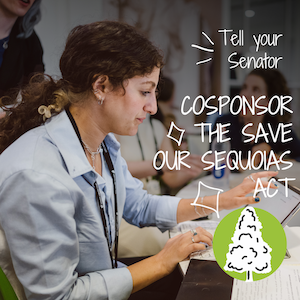
This month, we’re working to do exactly that — CCLers are writing to both Republican and Democratic senators to build more momentum for this legislation. We’re asking them to join Sen. Padilla and Sen. Curtis as cosponsors on the bill. Click here to send a message to your own senator today!
Science-based moves to Save the Sequoias
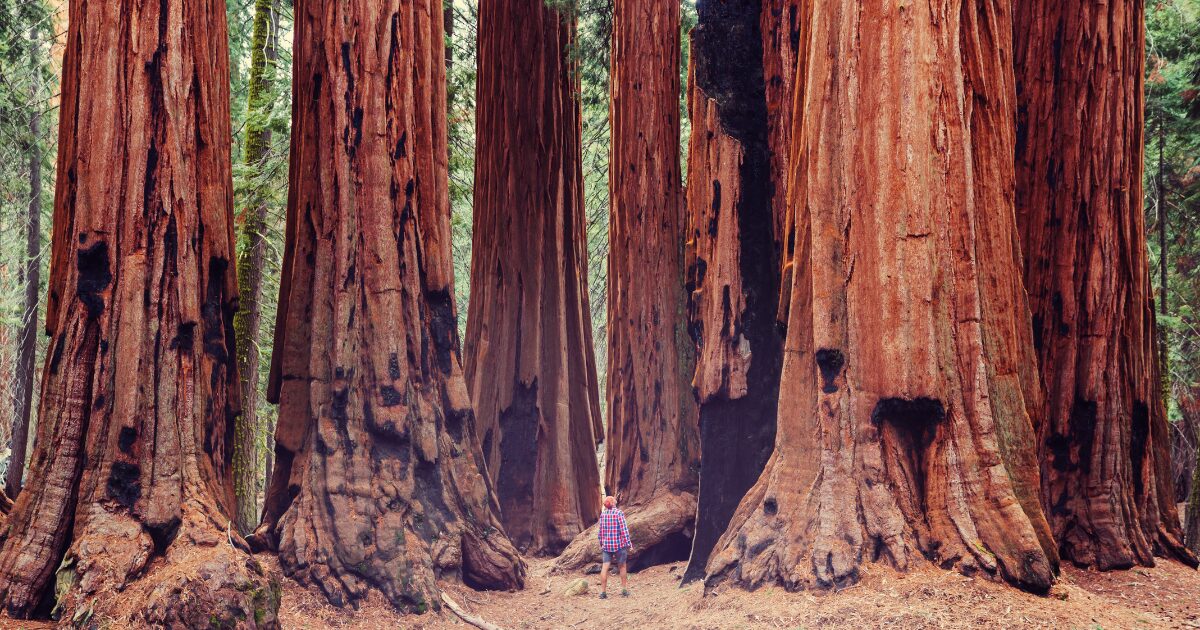
The Save Our Sequoias Act is designed to protect America’s Giant Sequoia trees from the increasing threat of catastrophic wildfires. These trees’ native range is the western side of the Sierra Nevada mountains in California, and between 2019 and 2021, an estimated 20% of them were destroyed in California wildfires.
Normally, these trees have bark thick enough to withstand fires caused naturally by lightning. In the past, natural wildfires were lower in temperature and actually helped sequoias to open their cones, scattering seeds for new growth.
But these days, wildfires are burning much hotter than normal. Fueled by rising temperatures, droughts, and denser forests resulting from years of overly aggressive fire suppression, the temperatures are too much for giant sequoias to withstand. California continues to face particularly bad wildfire seasons, plagued by events like the January 2025 Los Angeles fires.
At the current pace, it would take the U.S. Forest Service more than 50 years to manage just the 19 most-at-risk sequoia groves out of the total 70 groves. Without intervention, these trees could see a decline leading to an eventual extinction — releasing their stored carbon all along the way.
A new study in the journal Science reinforces the value of the U.S. Forest Service’s wildfire management projects, finding, “On average, fuel treatments are expected to generate $3.42 in benefits for every dollar invested.” The researchers say clearly that projects like prescribed burns are “not only ecologically beneficial but also economically justified.” The Save Our Sequoias Act would give land managers necessary tools and resources like these to proactively protect these forests.
And, speaking of the Forest Service, CCL is keeping a close eye on proposed changes to the agency’s structure. We want the Forest Service to have sufficient funding and staffing in order to implement legislation like the Save Our Sequoias Act and the Fix Our Forests Act, another climate-friendly forestry bill we support. Keep an eye out for another action soon where you can ask your Member of Congress to prevent budget cuts to the Forest Service as they work on the 2027 appropriations bills.