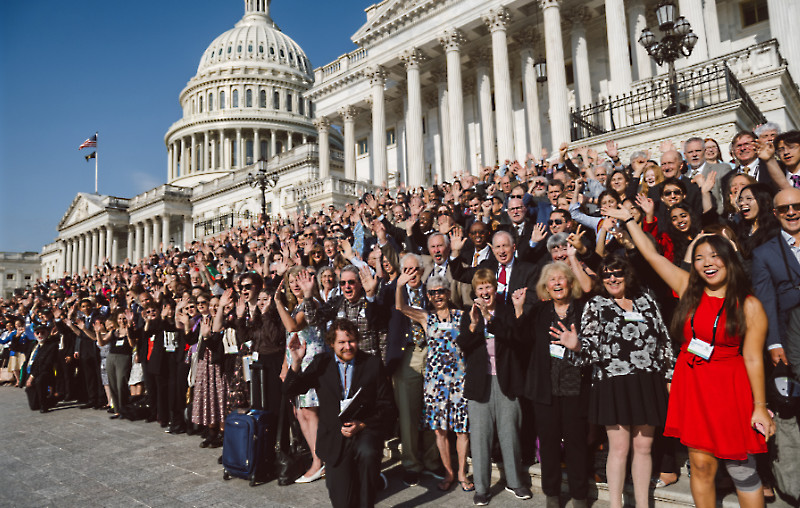
Over multiple Capitol Hill lobby days like this one, CCLers built broad support for the PROVE IT Act — a policy idea which is now law.
Persistence pays off: PROVE IT Act becomes law
By Aru Sakhariyanova
In advocacy, progress doesn’t usually happen overnight. It comes through steady persistence, built through conversations, calls and meetings.
In January, the Senate passed the fiscal 2026 Energy-Water spending package and it was signed into law days later by President Trump. Embedded in the bill was language that directed the Department of Energy (DOE) to conduct a comprehensive study comparing the emissions intensity of certain goods produced in the United States to the emissions of those same goods produced in other countries.
Sound familiar? That’s because CCL volunteers lobbied for exactly that from 2023 through 2024, as we diligently outlined the benefits of the Providing Reliable, Objective, Verifiable Emissions Intensity and Transparency Act — or the PROVE IT Act — to our members of Congress.
The bipartisan bill, originally introduced last Congress by Senators Kevin Cramer (R-ND) and Chris Coons (D-DE), would have directed the Department of Energy to study the carbon intensity of U.S. manufacturing compared to other countries, particularly as the European Union implements its carbon border adjustment mechanism (CBAM), which taxes certain imports based on emissions.
We want global trade policy to effectively reduce emissions, and this type of data will reveal that American manufacturers produce some of the cleanest goods in the world. Reliable carbon data helps ensure that American businesses compete on a level playing field and keeps driving global emissions down. Here’s CCL’s VP of Government Affairs, Jennifer Tyler, with the full story:
View this post on Instagram
Building support, one conversation at a time
CCLers worked hard to rally support for this policy, showing up in congressional offices, making calls and sending emails and educating their communities about the policy.
Together, the CCL community generated:
- 848 lobby meetings on Capitol Hill
- 14,666 messages to Congress
- 2,064 calls to key Senate committee members
Our Government Affairs team continued those conversations, keeping the dialogue alive and building bipartisan backing for the policy.
Even though the bill did not pass as a standalone measure before the end of the last Congress, our persistent advocacy built broad support for the idea. The idea finally found the right political moment and the right legislative vehicle to cross the finish line earlier this year, making it into the 2026 Energy and Water funding package and being signed into law.
An encouraging moment and motivation for tomorrow
Reflecting on this win, Sen. Cramer told E&E News, “It’s like so many legislative accomplishments. It starts years before it’s accomplished.”
This moment is a reminder that sustained grassroots advocacy is the secret ingredient to advancing bipartisan climate policy. Our long-term, persistent efforts to build common ground really matter.
To every volunteer who attended a lobby meeting, made a call, sent a message, wrote a letter to the editor, or had a thoughtful conversation in their community about this policy idea — thank you!
This progress wouldn’t have happened without your contributions. Even when the impact isn’t immediate or obvious, every small, individual action builds toward future victories. Here’s to many more!
Aru Sakhariyanova is a Communications Intern with CCL for Spring 2026. She is a student at Furman University studying Sustainability Science and Communication Studies.