


Why Put a Price on Carbon?
The Benefits of Carbon Pricing
Net Zero by 2050
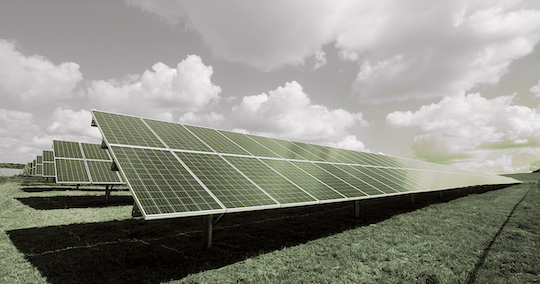
A strong, economy-wide price on carbon could reduce America’s carbon pollution by 50% by 2030, putting us on track to reach net zero by 2050. Learn more from these recent studies.

Affordable Clean Energy
America leads the world with technology innovation. When government puts a price on carbon, it sends a signal through the economy. Businesses respond by becoming more energy efficient and developing new sources of clean, renewable energy. These innovations will not only lead to reduced greenhouse gas emissions, but also provide abundant, affordable, and reliable clean energy and drive us faster toward net zero carbon pollution.

Money in Your Pocket
A carbon tax becomes affordable for ordinary Americans when the money collected from fossil fuel companies is given as a dividend, or “carbon cash back” payment, to every American to spend with no restrictions. This protects low-and-middle-income Americans who otherwise might not be able to afford the transition.
Studies show that the monthly carbon cash back payments are enough to essentially cover increased costs of 85% of American households, including 95% of the least wealthy 60% of Americans.
This type of carbon tax is called a “carbon fee and dividend”. Citizens’ Climate Lobby has been advocating for this policy for over a decade.

Saves Lives
A carbon price will save 4.5 million American lives over the next 50 years by restoring clean air across the country. It will have particular impact in communities of color, which have suffered the worst health impacts of burning fossil fuels. Exposure to air pollution has also made people in communities of color more vulnerable to the worst impacts of COVID-19.
Air pollution from fossil fuels, and its impact on our health, is worse than we thought. New research shows that premature deaths in America each year due to air pollution are nearly twice as high as previously understood. As many as 1 in 10 American deaths today is caused by air pollution.
Creates Jobs
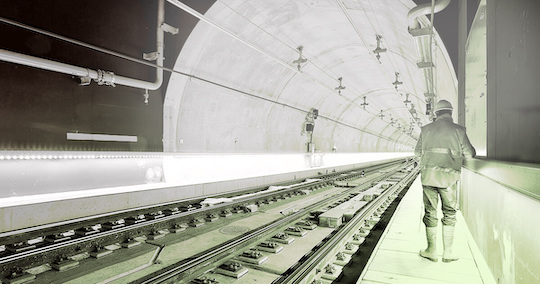
A carbon fee will incentivize innovation by America’s businesses, creating millions of new jobs that will transform our economy and put Americans back to work.

Keeps Businesses Healthy
Businesses prefer a carbon price to other climate solutions because they remain financially stable while they adjust their operations, thanks to a predictable and gradually rising carbon pricing. They will not lose time or spend extra money trying to understand complicated new regulations and rules and incorporate them into their plans.

Strong Economy
A carbon fee is the best climate solution for America’s economy because it is the most cost-efficient way to lower America’s pollution. To match its impact, multiple regulations across economic sectors would be needed, at an additional cost of hundreds of billions of dollars every year to America’s economy.
By 2050, this policy could save Americans over $800 billion each year in economic losses, or over $6,000 per household. On our current course, America’s economy is forecast to shrink by up to 7% due to the increased costs of climate change by 2050.
Pricing Carbon 101: What is Carbon Pricing?
CCL supports an economy-wide carbon tax, where the money is given to people, typically referred to as a carbon fee and dividend or carbon tax and dividend. With a carbon tax, a fee is applied wherever fossil fuels enter the economy. This price flows through the economy, incentivizing businesses and people to switch to clean energy. Fossil fuels such as oil, natural gas, and coal all contain carbon. When burned, they release potent greenhouse gases (GHG) and carbon dioxide (CO2) into the atmosphere. Putting a price on carbon involves placing a fee on these fossil fuels and carbon pollution. This fee is based on the metric tons of carbon dioxide (CO2) the fuel would generate, and it would be assessed at the earliest point of sale into the economy—as close as possible to the well, mine, or port. MIT has produced a short explainer and podcast episode on the subject.
It can also be used to refer to a “cap and trade” system. A cap and trade works by setting a “cap,” (maximum for total emissions) and then selling and trading permits for the right to pollute up to that cap. It requires bureaucracy to implement and run, and it creates price volatility that is difficult for businesses. CCL does not support a cap and trade system. A carbon tax is far simpler, with less bureaucracy, lower costs, and more predictability.
Scientists, economists, businesses, and most Americans support a price on carbon.
Does putting a price on carbon work?
Yes, it will quickly transform our electricity sector to net zero emissions, and then electrify our buildings and our transportation sector. Our industrial sector will transition to net zero via a mix of efficiency, electrification, carbon capture, and other carbon emission reductions technology.
Studies have shown that a steadily-rising price, starting at $15/ton and rising by $10/ton per year, would cut fossil fuel pollution by 30% in the first 5 years alone. This will put America on a path to hit the targets set by the Paris accords and to reach net zero by 2050.
What’s the difference between a carbon fee and a carbon tax?
Generally, “carbon tax” and “carbon fee” are used interchangeably, and referring to the same type of legislation. Technically speaking, a tax has the primary purpose of raising revenue. By contrast, a fee is a payment in exchange for a service or privilege. People may use a carbon fee to describe a policy that does not grow the size of government. When the money raised is given to people, the policy is typically referred to as a carbon fee and dividend. For over a decade, Citizens’ Climate Lobby has supported a carbon fee and dividend. Giving money to people so that they can afford a transition to clean energy makes a carbon tax fair and politically durable. Read more: Carbon Fee vs Carbon Tax: what’s the difference?
Is carbon pricing good or bad for the economy?
Regardless of what opponents of carbon pricing might say, all of the evidence shows that a carbon fee that sends carbon cash back payments to households will actually improve the economy and create jobs. Savings in public health alone will be far more than the costs of the policy.
How well does it cut greenhouse gas emissions (GHG)?
Reducing emissions is the long-term goal of any climate policy, and this is the single most powerful tool to achieve that. Predicting how a given policy will affect carbon emissions is done through energy system modeling, a subject of intense study and refinement in recent years. A state-of-the-art energy system model from Resources for the Future calculates that a plan like the Energy Innovation and Carbon Dividend Act can cut carbon emissions 52% below 2005 levels in eight years. This confirms that a popular carbon pricing plan, if enacted promptly, could reduce emissions quickly and deeply enough to put the U.S. on a 1.5°C-compliant trajectory.
What other countries have started pricing carbon?
As of May 2021, there are 64 carbon pricing policies in operation and 3 scheduled for implementation. These include both carbon taxes and emissions trading schemes (ETS), and cover about 22% of worldwide emissions. The list of countries that already practice some method of national carbon pricing includes Argentina, Canada, Chile, China, Colombia, Denmark, the European Union (27 countries), Japan, Kazakhstan, Korea, Mexico, New Zealand, Norway, Singapore, South Africa, Sweden, the UK, and Ukraine. Other countries that are considering joining them include Brazil, Brunei, Indonesia, Pakistan, Russia, Serbia, Thailand, Turkey, and Vietnam. Many countries, including most of our large trading partners, have instituted some form of national carbon pricing. Of all the world’s developed economies, only Australia and the U.S. do not have nationwide carbon pricing in place.
How does carbon pricing impact inflation?
Some people assume that carbon pricing will contribute to inflation by raising the price of carbon-intensive products. But modeling suggests that carbon pricing would have a minimal impact on inflation, and a recent paper found that real-world carbon pricing systems have not contributed to inflation. On top of that, the purpose of carbon cashback is to offset the financial impacts of a carbon price for most households. Learn more here.
Are carbon fees bad for the economy?
Evidence shows that a carbon fee that sends carbon cashback payments to households will actually improve the economy and create jobs. Savings in public health alone will be far more than the costs of the policy.
How can I help?
You can email your members of Congress and remind them about the many benefits of pricing carbon. Take action!
Let’s Get Back to Work, America.
Climate change is a huge challenge for America. It’s also a huge opportunity to put millions of Americans back to work in stable, well-paying jobs.
A carbon fee drives technology innovation, which will transform our economy and lead to millions of new jobs across the country. It will also make America a clean-energy leader and reduce our carbon pollution 50% by 2030.
See our other policy initiatives:
Related articles:
