Permitting reform: A major key to cutting climate pollution
By Dana Nuccitelli, CCL Research Coordinator
Permitting reform has emerged as the biggest and most important clean energy and climate policy area in the 119th Congress (2025-2026).
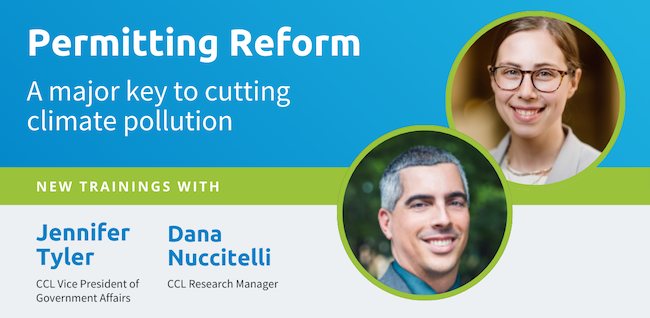
To make sure every CCL volunteer understands the opportunities and challenges ahead, CCL Vice President of Government Affairs Jennifer Tyler and I recently provided two trainings about the basics of permitting reform and understanding the permitting reform landscape.
These first introductory trainings set the stage for the rest of an ongoing series, which will delve into the details of several key permitting reform topics that CCL is engaging on. Read on for a recap of the first two trainings and a preview of coming attractions.
Permitting reform basics
Before diving into the permitting reform deep end, we need to first understand the fundamentals of the topic: what is “permitting”? What problems are we trying to solve with permitting reform? Why is it a key climate solution?
In short, a permit is a legal authorization issued by a government agency (federal and/or state and/or local) that allows a specific activity or project to proceed under certain defined conditions. The permitting process ensures that public health, safety, and the environment are protected during the construction and operation of the project.
But the permitting process can take a long time, and in some cases it’s taking so long that it’s unduly slowing down the clean energy transition. “Permitting reform” seeks to make the process more efficient while still ensuring that public health, safety, and the environment are protected.
There are a lot of factors involved in the permitting reform process, including environmental laws, limitations on lawsuits, and measures to expedite the building of electrical transmission lines that are key for expanding the capacity of America’s aging electrical grid in order to allow us to connect more clean energy and meet our energy affordability and security and climate needs.
But if we can succeed in passing a good, comprehensive permitting reform package through Congress, it could unlock enough climate pollution reductions to offset what we lost from this year’s rollback of the Inflation Reduction Act’s clean energy investments. Permitting reform is the big climate policy in the current session of Congress.
Understanding the permitting reform landscape
In the second training of this series, we sought to understand the players and the politics in the permitting reform space, learn about the challenges involved, and explore CCL’s framework and approach for weighing in on this policy topic.
Permitting reform has split some traditional alliances along two differing theories about how to best address climate change. Some groups with a theory of change relying on using permitting and lawsuits to slow and stop fossil fuel infrastructure are least likely to be supportive of a permitting reform effort. Groups like CCL that recognize the importance of quickly building lots of clean, affordable energy infrastructure are more supportive of permitting reform measures.
The subject has created some strange bedfellows, because clean energy and fossil fuel companies and organizations all want efficient permitting for their projects, and hence all tend to support permitting reform. For CCL, the key question is whether a comprehensive permitting reform package will be a net benefit to clean energy or the climate — and that’s what we’re working toward.
The two major political parties also have different priorities when it comes to permitting reform. Republicans tend to view it through a lens of reducing government red tape, ensuring that laws and regulations are only used for their intended purpose, and achieving energy affordability and security. Democrats prioritize building clean energy faster to slow climate change, addressing energy affordability, and protecting legacy environmental laws and community engagement.
As we discussed in the training, there are a number of key concepts that will require compromise from both sides of the aisle in order to reach a durable bipartisan permitting reform agreement. We’ll delve into the details of these in these upcoming trainings:
The Challenge of Energy Affordability and Security
First, with support from CCL’s Electrification Action Team, on February 5 I’ll examine what’s behind rising electricity rates and energy insecurity in the U.S. and how we can solve these problems. Electrification is a key climate solution in the transition to clean energy sources. But electricity rates are rising fast and face surging demand from artificial intelligence data centers. Permitting reform can play a key role in addressing these challenges.
Transmission Reform and Key Messages
Insufficient electrical transmission capacity is acting as a bottleneck slowing down the deployment of new clean energy sources in the U.S. Reforming cumbersome transmission permitting processes could unlock billions of tons of avoided climate pollution while improving America’s energy security and affordability. In this training on March 5, Jenn and I will dive into the details of the key clean energy and climate solution that is transmission reform, and the key messages to use when lobbying our members of Congress.
Clean energy projects often encounter long, complex permitting steps that slow construction and raise costs. Practical permitting reforms can help ensure that good projects move forward faster while upholding environmental and community protections. In this training on March 19, Jenn and I will examine permitting reforms to build energy infrastructure faster, some associated tensions and compromises that they may involve, and key messages for congressional offices.
Presidents from both political parties have taken steps to interfere with the permitting of certain types of energy infrastructure that they oppose. These executive actions create uncertainty that inhibits the development of new energy sources in the United States. For this reason, ensuring fair permitting certainty is a key aspect of permitting reform that enjoys bipartisan support. In this training on April 2, Jenn and I will discuss how Congress can ensure certainty in a permitting reform package, and key messages for congressional offices.
Community Engagement and Key Messages
It’s important for energy project developers to engage local communities in order to address any local concerns and adverse impacts that may arise from new infrastructure projects. But it’s also important to strike a careful balance such that community input can be heard and addressed in a timely manner without excessively slowing new clean energy project timelines. In this training on May 7, Jenn and I will examine how community engagement may be addressed in the permitting reform process, and key messages for congressional offices.
We look forward to nerding out with you in these upcoming advanced and important permitting reform trainings! 🤓
Want to take action now? Use our online action tool to call Congress and encourage them to work together on comprehensive permitting reform.
Related Articles
-

Steady progress toward big wins: Our 2025 fall lobbying and call-in campaign
-
Grassroots climate advocates hold 300+ virtual lobby meetings with congressional offices
-

Statement on Energy Permitting Reform Act negotiations
-
1,300+ grassroots advocates attend virtual climate conference; 300+ lobby meetings take place this week